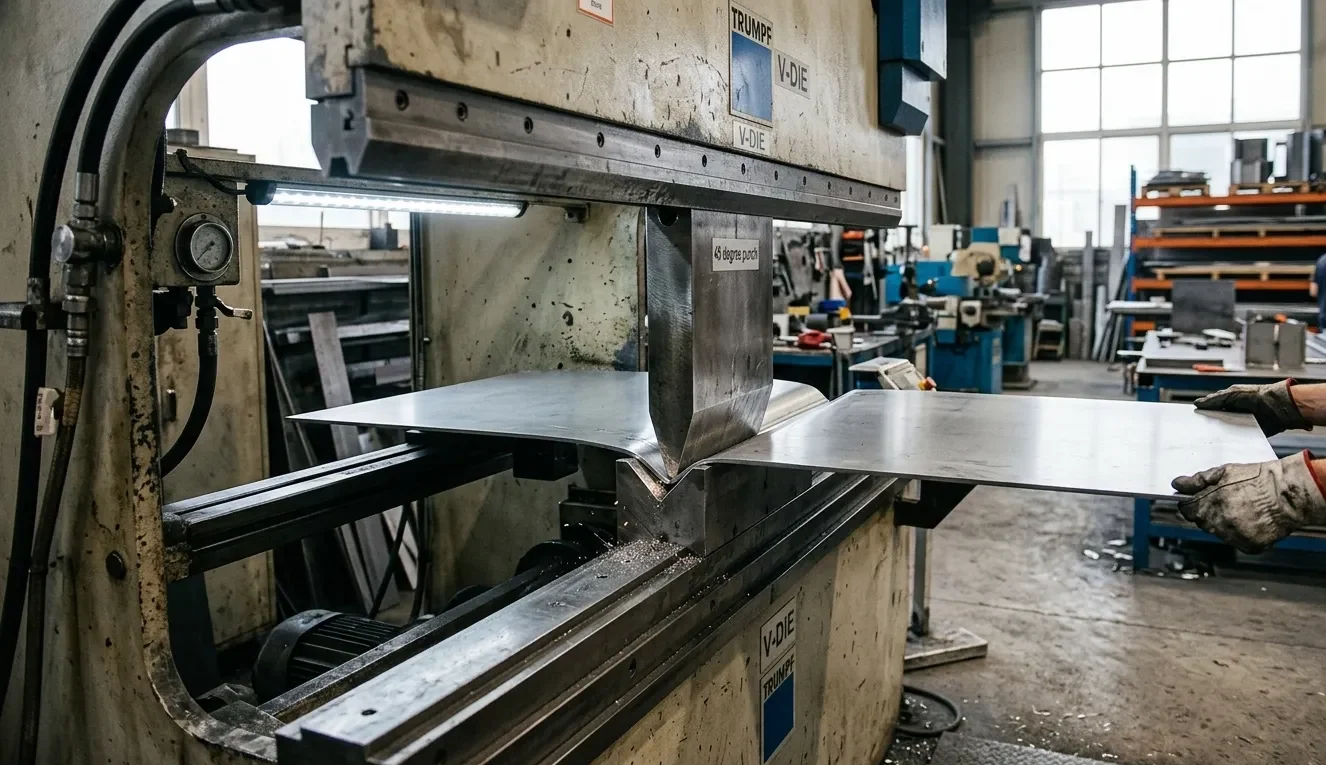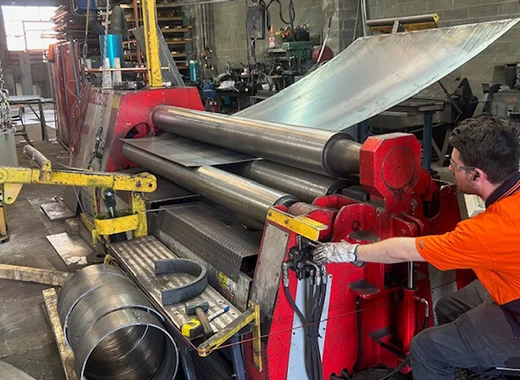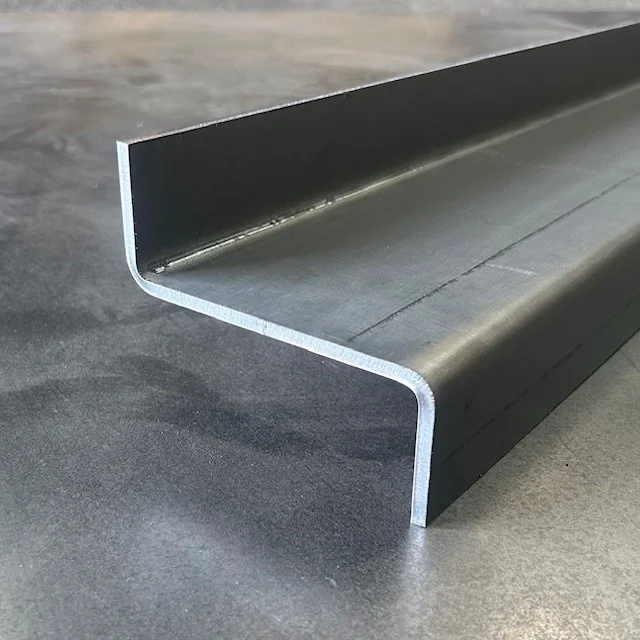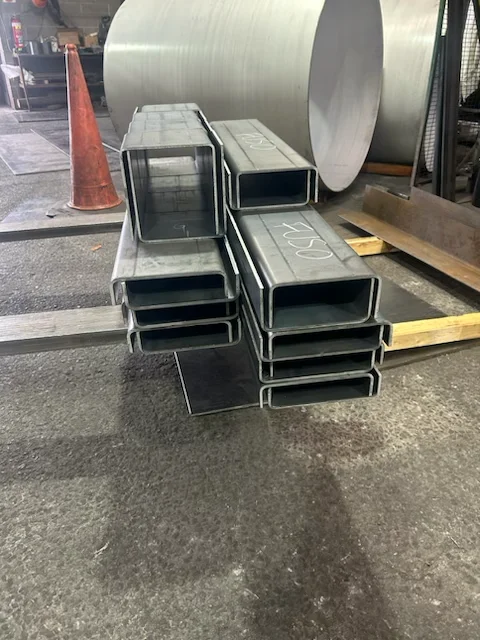
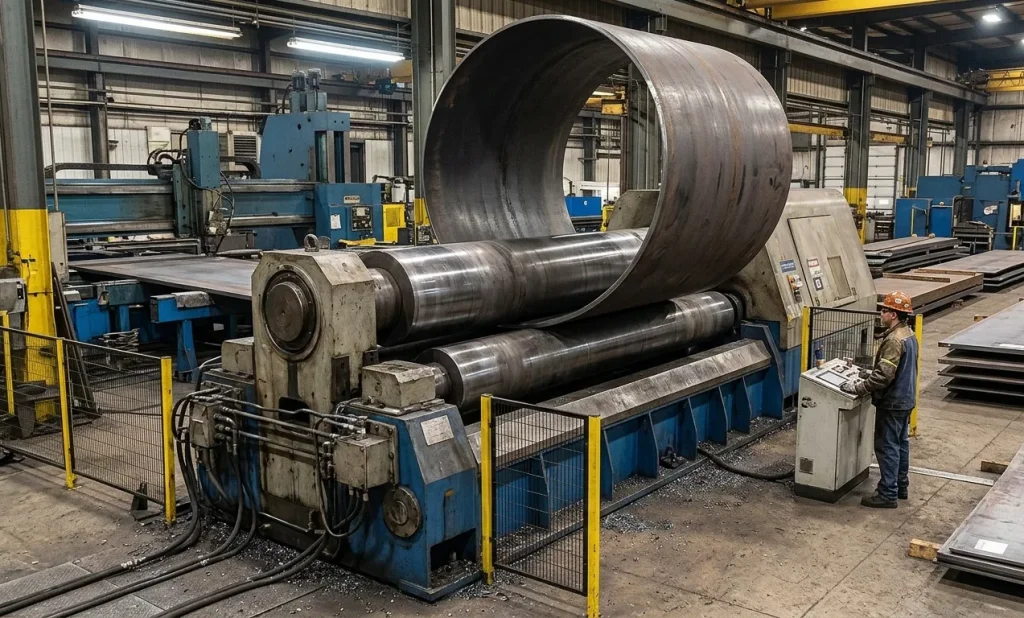
Avoid costly fabrication errors with essential plate rolling design considerations. Learn key factors affecting accuracy, tolerances, and efficiency in heavy metal plate rolling.
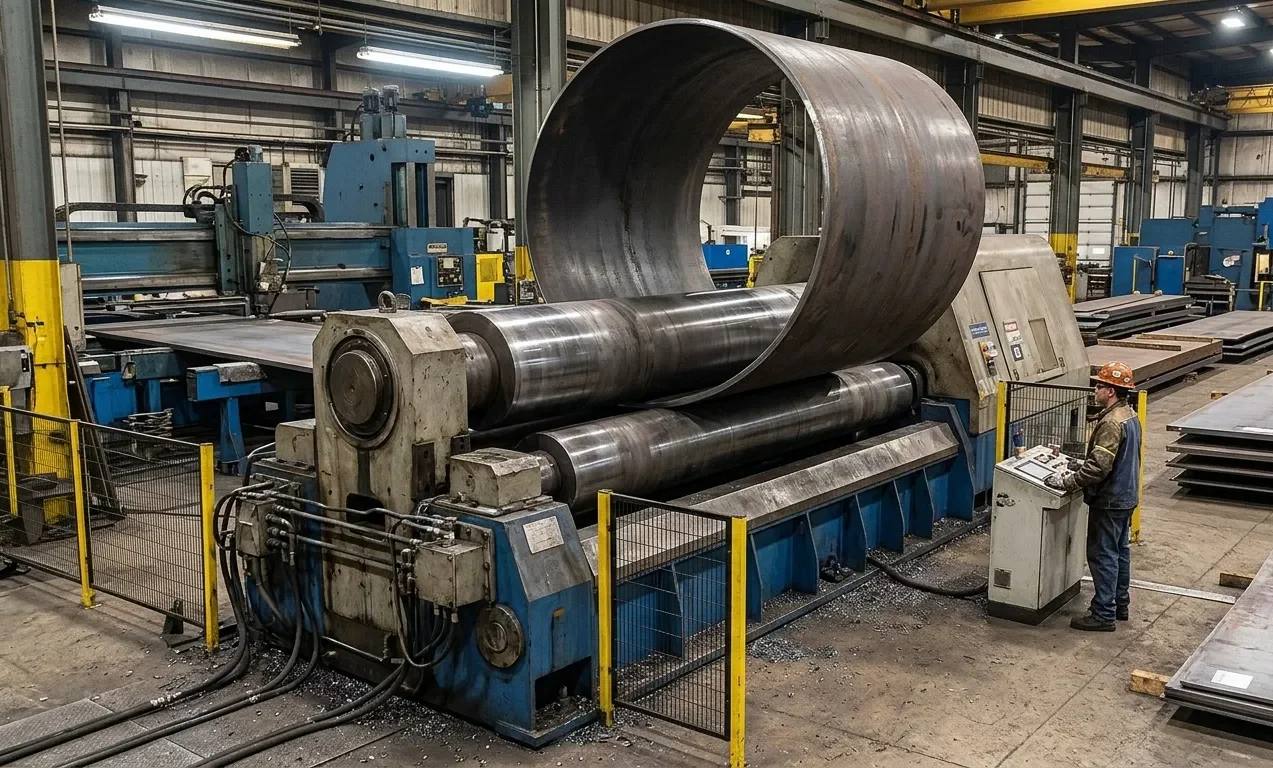
Plate rolling design considerations refer to the engineering and fabrication factors that influence how metal plates are formed into curved shapes while maintaining dimensional accuracy and structural integrity.
These considerations are essential in heavy fabrication projects involving tanks, pressure vessels, and structural components, where precision and efficiency are critical.
What Are Plate Rolling Design Considerations?
Plate rolling design considerations include material behaviour, rolling limits, tolerances, and fabrication constraints that determine whether a metal plate can be accurately formed.
Key factors include:
- Plate thickness and machine capacity
- Minimum rolling diameter
- Material strength and ductility
- Weld allowances and edge preparation
- Achievable dimensional tolerances
Material Behaviour and Rolling Feasibility
Material selection directly affects how metal responds during rolling. Carbon steel, stainless steel, and aluminium all behave differently under pressure, influencing curvature and forming consistency.
A critical factor is springback, where metal partially returns to its original shape after bending. Engineers must compensate for this during design to maintain accuracy.
Working with experienced fabricators helps ensure these variables are addressed early. Learn more about KIBO’s fabrication expertise and capabilities.
Key Plate Rolling Design Considerations
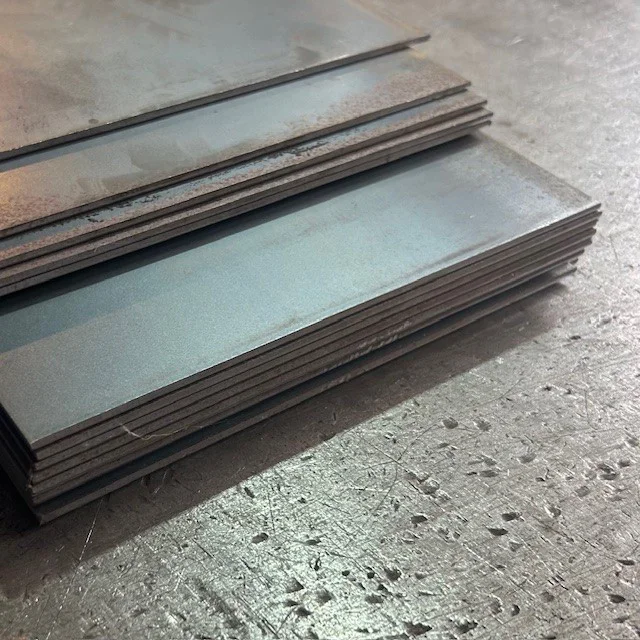
- Plate Thickness Capability
Rolling machines must apply consistent pressure across the plate. If the thickness exceeds capacity, distortion or surface damage may occur.
Explore our plate rolling services to understand available capabilities.
- Minimum Rolling Diameter
Each rolling machine has a minimum radius it can achieve. Designs must align with this limit to avoid secondary forming or rework.
- Material Strength and Ductility
High-strength steels and specialty alloys resist deformation and require controlled rolling processes to maintain accuracy.
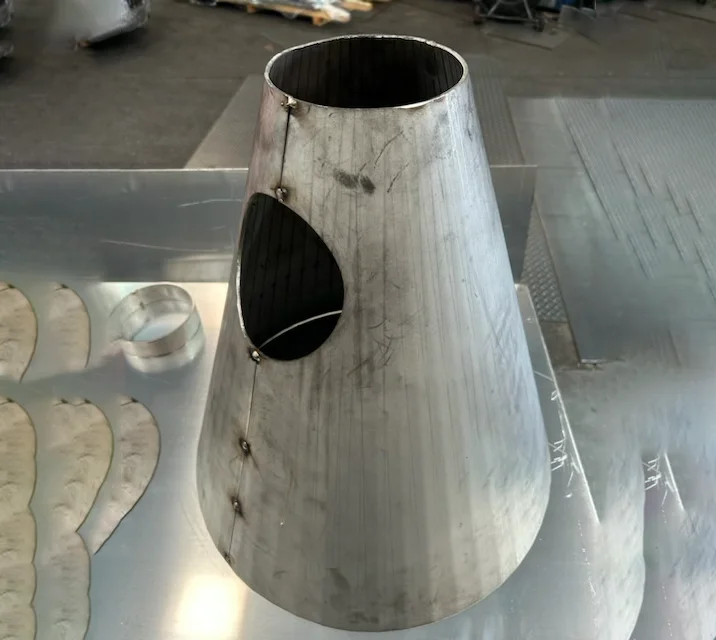
- Weld Allowances and Edge Preparation
Adequate allowance must be included for welding after rolling. Poor edge preparation can lead to dimensional inaccuracies during assembly.
- Realistic Dimensional Tolerances
Engineering tolerances should reflect achievable fabrication precision. Overly tight tolerances increase cost and production complexity.
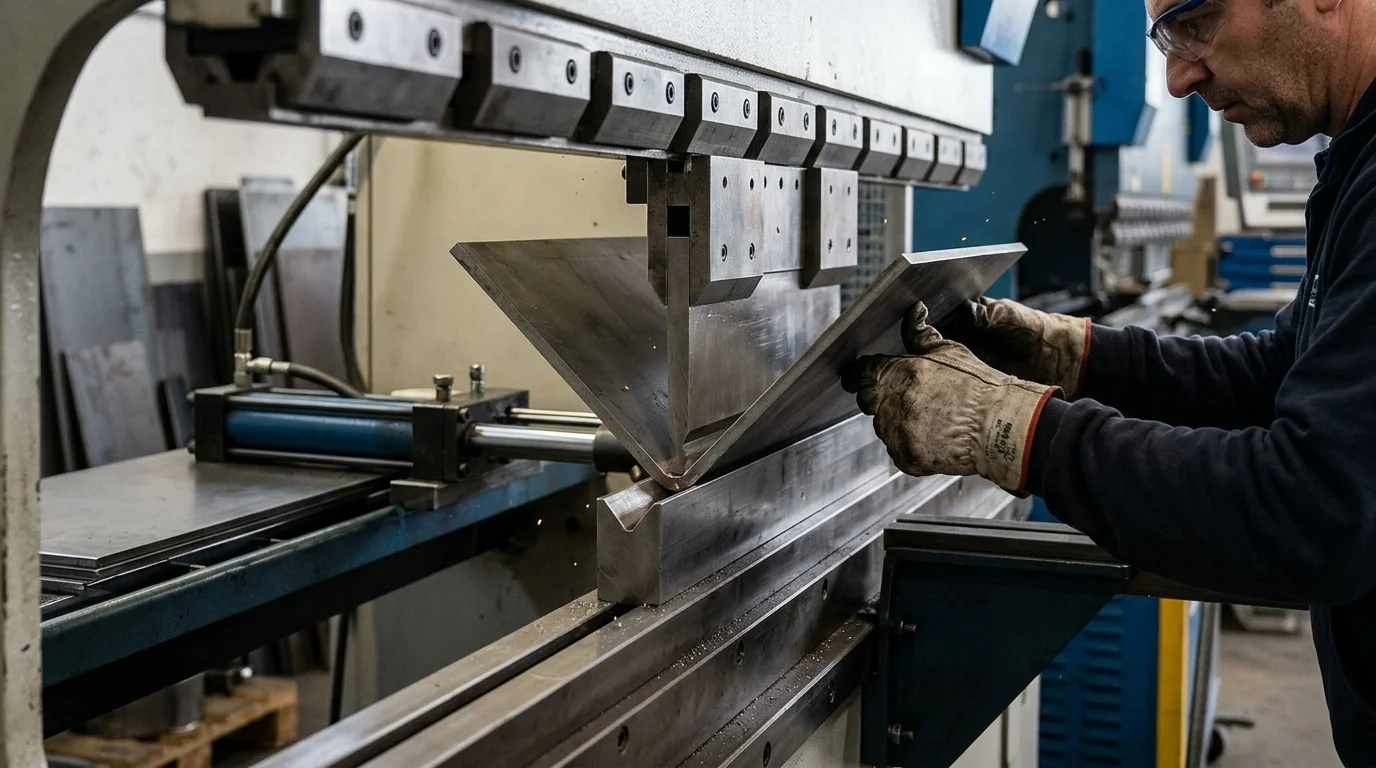
Additional forming capabilities are available through our metal folding services.
What Affects Plate Rolling Accuracy? (Snippet Target Section)
Plate rolling accuracy is affected by:
- Material type and thickness
- Machine capacity and configuration
- Rolling diameter limitations
- Springback behaviour
- Operator expertise
Accurate results depend on aligning design specifications with real fabrication conditions.
Engineering and Fabrication Alignment
Successful plate rolling requires early collaboration between engineers and fabricators to ensure feasibility and efficiency.
This ensures:
- Equipment capability matches design requirements
- Tolerances are achievable
- Materials are suitable for forming
- Production risks are reduced
KIBO works closely with clients to ensure designs translate into reliable fabrication outcomes. View our engineering and fabrication capabilities.
Industry Standards and Best Practice
Plate rolling in Australia follows recognised engineering standards. The Australian Steel Institute provides technical guidance through its technical notes and resources, supporting best practices in steel fabrication.
Why Are Plate Rolling Design Considerations Important? (Snippet Target Section)
Plate rolling design considerations are important because they:
- Prevent fabrication errors
- Reduce material waste
- Improve dimensional accuracy
- Lower production costs
- Ensure structural integrity
Ignoring these factors can lead to rework, delays, and compromised performance.
Work with Experienced Plate Rolling Specialists
KIBO combines engineering knowledge with practical fabrication expertise to deliver reliable heavy plate rolling results.
We help engineers:
- Validate designs before fabrication
- Optimise rolling feasibility
- Reduce production risks
Get in touch via our contact page to discuss your project.